
India's fuel demand in May slumped to its lowest in nine months as restrictions to curb the second wave of COVID infections stalled mobility and muted economic activity. Fuel demand fell 1.5 per cent to 15.1 million tonnes despite the low base of May 2020 and was down 11.3 per cent when compared to the previous month, according to data from the Petroleum Planning and Analysis Cell (PPAC) of the oil ministry. India was under one of the world's strictest lockdowns in May last year, which brought all mobility and economic activity to a grinding halt.

Airlines say ATF fuel prices in India are 40 per cent higher than in countries such as Singapore. Jharkhand, Chhattisgarh and Maharashtra

The S&P BSE Sensex closed at 26,190, up by 43 points and Nifty50 settled above 7,950 to end at 7,963, up by 17 points

The increase in petrol prices from Saturday midnight has made the fuel more expensive than aircraft turbine fuel, used to power planes.

Concerned over high service tax substantially raising air ticket prices, Civil Aviation Minister Ajit Singh has urged Finance Minister Pranab Mukherjee to revert to the earlier rates which were capped at Rs 100 and Rs 500 per domestic and international ticket.

In a meeting with stakeholders last week, the authority mooted setting up a Special Purpose Vehicle along with airlines and state-owned oil marketing companies to develop common infrastructure to import ATF, among others, at Chennai and Kolkata airports. While AAI and OMCs will hold 76 per cent in the proposed SPV, the airlines will participate in the remaining 24 per cent equity.

An airfare regulatory authority likely soon.
'The recent price hike would only be beneficial if the airlines continue to operate at 80 per cent airline capacity. An increase towards 90 or 100 per cent airline capacity would again add pressure to the fares as demand remains muted. Also, we are in the fourth quarter of the fiscal year which is a seasonally weaker quarter,' says an analyst.

State-owned oil firms on Friday hiked jet fuel prices by almost 2 per cent, the sixth straight increase in rates since October when international crude oil prices started climbing.

'If petro products are brought into GST, then there will be minor impact on the incidence of tax... and minor impact on prices. The price of petrol, diesel will continue to be driven by global factors'
Airlines have been conducting fuel efficiency analysis, which involves fuel calculations on a daily basis, based on the availability of optimum routes in terms of wind, flight levels and overflying charges, route rationalisation to prune the number of flights and increase utilisation. They also want the Centre to grant ATF a declared goods status, which would result in a uniform levy of 4 per cent sales tax at the state level.
.jpg)
Observing that the prime reason for these losses was high fuel cost which constituted almost 40-50 per cent of an airline's total costs, Civil Aviation Minister Ajit Singh said the aviation turbine fuel (ATF) prices were high due to rising base price and "very high VAT imposed by state governments."
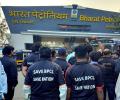
The sale is key to meeting the government's disinvestment target of Rs 2.1 trillion in the financial year 2020-21. So far, the disinvestment exercise has fetched the government Rs 34,845 crore during the current financial year.

In a bid to slash costs, Air India has hedged 10,000 barrels of jet fuel for its aircraft this month, four weeks after its Board gave a nod to the move.

Saudi Aramco had right from the beginning resisted the price tag Reliance had put for the 20 per cent stake in O2C business, which comprises the company's twin refineries at Jamnagar in Gujarat, petrochemical plants and 51 per cent in fuel retailing venture.
India's domestic aviation market has clocked a growth rate of 22 per cent in the last one year.
Hit by soaring fuel prices, the aviation industry is mulling introduction of a "differential fuel surcharge" based on VAT rates in each state to partially offset losses suffered by the air carriers. "Airlines would not be able to survive if the cost of aviation turbine fuel (ATF) is so high and competition brings down the fares," V Thulasidas, chairman and managing director, Air India said.
Airports levy charges such as FTC, infrastructure charge, and into-plane charges on sale of jet fuel. The levy is passed through to airlines, pushing up costs.
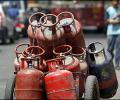
The price of subsidised cooking gas was on Tuesday hiked by over Rs 2 per cylinder, the sixth increase in rates in five months, while that of jet fuel was raised by a steep 7.3 per cent in step with global trends.

Reliance has a 24 per cent conversion rate of 'oil-to-chemicals' at present and may be targeting 70 per cent conversion.
The growth, however, may not indicate a major revival of economic activity.

'The levy proposed to be charged on air tickets for regional connectivity fund would marginally increase cost.'
Indian Airlines fares have been raised by 15 per cent across the board with immediate effect due to a massive increase in the prices of aviation turbine fuel, Civil Aviation Minister Shahnawaz Hussain

There are both positive and negative impacts of the tax, but the net result for India's infrastructure sector is advantageous, says Vinayak Chatterjee.

Large trade deficit and rupee decline against the US dollar are putting pressure on the CAD, and these steps are likely to have a positive impact on the external sector.

Re-instatement of 5% custom duty on crude imports will help.

Majority of India's international routes have been captured by foreign airlines.

It is imperative that the government first decides who should assume ownership of running Air India.
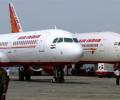
Currency depreciation also hits earnings of all domestic carriers

Though SpiceJet is likely to resume flights, experts have a doubt on the airline's financial capabilities.

Auto stocks Hero MotoCorp and Mahindra & Mahindra gained 1-2 per cent on the back of strong sales in the month of September.
Budget should be a platform for govt to take bold steps.
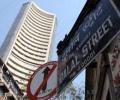
The 30-share Sensex ended down 71 points at 26,710 and the 50-share Nifty lost 38 points to close at 8,030.

The government also said it will hold consultations with the airlines to explore the possibility of curbing the menace of charging exorbitant airfares during emergency situations.

The national carrier's market share has declined from a near-monopoly to 16.6 per cent as of September 2014.
